
I’ll say this as plainly as I can: phone photos may be costing some listings attention.
That does not mean cell phone cameras are bad. Today’s phones can take impressive pictures. They are fast, convenient, and perfect for many everyday situations.
But photographing a home for sale is not an everyday situation.
A buyer may decide whether to keep scrolling in less time than it takes to pour a cup of coffee. If the first photograph does not catch their attention, the rest of the marketing may never get a chance.
That is why professional versus cell phone listing photography is not really a debate about cameras. It is a decision about first impressions, buyer confidence, and whether a property receives the attention it deserves.
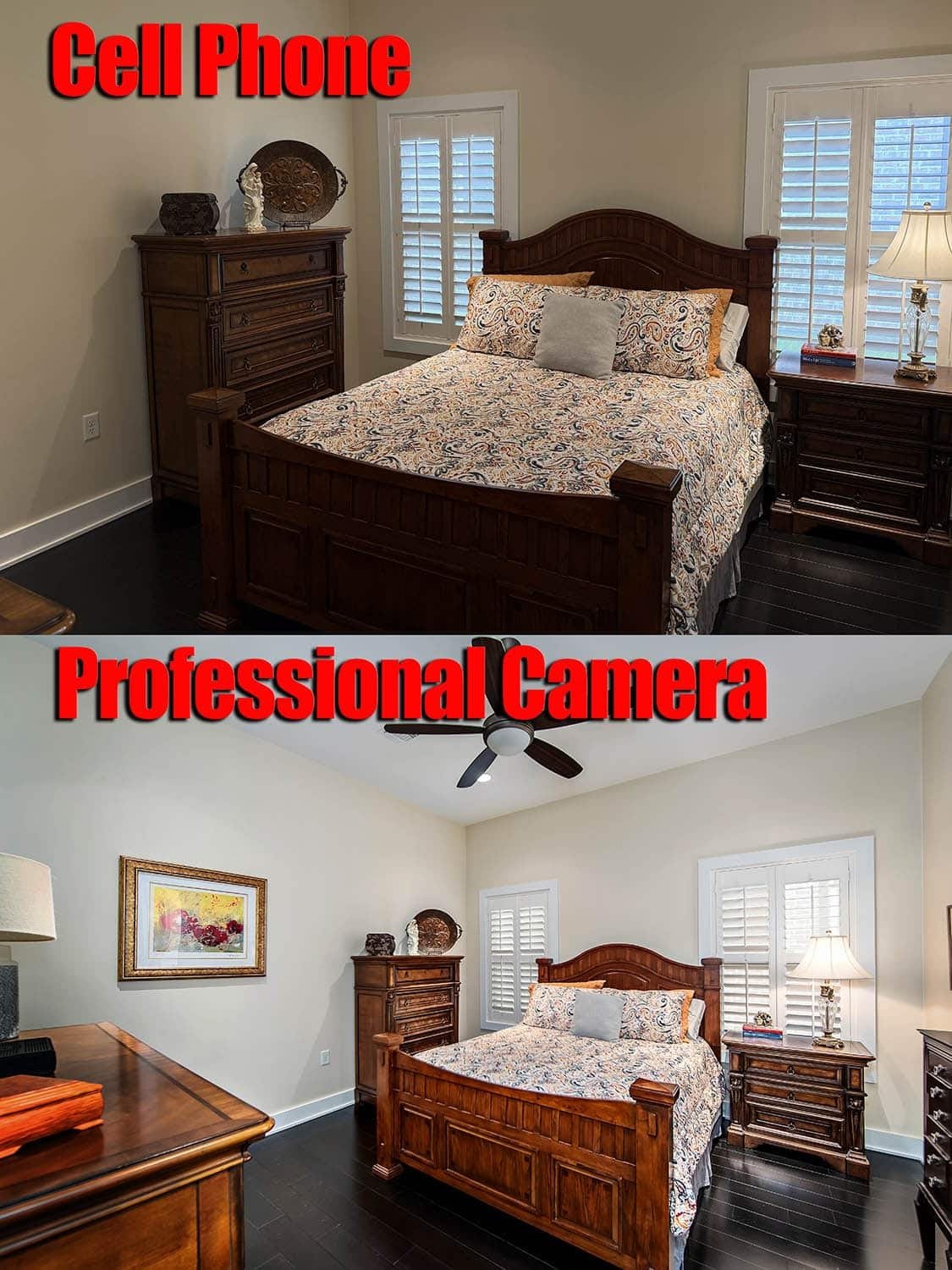
The Photography Is the First Showing
Most buyers see the photographs before they study the square footage, read about the upgrades, or notice the beautifully written property description.
The photos are their first showing.
As they scroll, buyers are quietly asking themselves:
- Does this home feel bright and welcoming?
- Is there enough room for my furniture?
- How do the rooms connect?
- Is that kitchen worth seeing in person?
- Can I picture myself living there?
When listing photos are dark, crooked, overly wide, or filled with distractions, buyers may not stop to analyze what is wrong. They simply move on.
That is the painful part.
A home can be clean, well maintained, and full of character in person while looking small, gloomy, or neglected online. The problem is not the house. The problem is how the house was presented.
Good photography gives buyers visual confidence. It helps them understand the layout, appreciate the important features, and imagine what it would feel like to walk through the front door.
The goal is never to make a property look like something it is not. The goal is to show the best, honest version of what is already there.
It Is Not Just the Camera
Professional real estate photography is about much more than owning expensive equipment.
The real difference is the person behind the camera and the decisions made before the shutter is ever pressed.
When I enter a property, I look for the story of the home.
Maybe it is a wide front porch built for slow South Louisiana evenings. Maybe it is the natural light pouring into the living room, a beautifully renovated kitchen, or the way the backyard opens behind the house.
Every home has something worth noticing. My job is to find it and photograph it in a way that helps buyers notice it too.
Not every room needs the same angle. Not every feature deserves equal attention. Sometimes moving a camera only a few feet can completely change how clearly a buyer understands the room.
A phone normally makes automatic decisions about brightness, color, contrast, and perspective. Those automatic choices can be helpful, but they are not always accurate.
A bright window may become a white glow while the room turns dark. Warm interior lights may make neutral walls look yellow or orange. A camera held slightly too high, too low, or off-center can make counters, ceilings, and doorways appear crooked.
Each of those issues may seem small. Together, they can make an otherwise good property feel less polished.
Control Makes the Difference
Professional equipment gives me control, but the equipment only matters if the photographer knows how to use it.
I balance light from windows, lamps, and fixtures so rooms feel natural rather than gloomy or washed out. I choose angles that communicate the size and purpose of a space without stretching it into something unrealistic.
I also keep vertical lines straight. Leaning walls may be fun in a funhouse, but they do not belong in a property listing.
The final photographs are then carefully refined.
Color should look believable. Floors should not turn blue. Cabinets should not glow orange. White walls should still look white.
Editing is not supposed to create a fantasy version of the home. It should bring the photograph closer to what your eyes experienced when you walked through the property.
You can learn more about my approach to photography and why those details matter.
Preparation Is Still Important
Even the best photographer cannot make clutter completely disappear. Strong real estate photography begins with a little preparation.
You do not have to stage every home like a magazine spread. A few practical steps can make a tremendous difference:
- Clear kitchen and bathroom counters as much as possible.
- Put away pet bowls, visible cords, and personal items.
- Turn on working lights and replace burned-out bulbs.
- Open blinds when the view or natural light helps the room.
- Move vehicles away from the front of the property.
- Put away trash cans, hoses, toys, and loose yard tools.
- Sweep the entry and straighten outdoor furniture.
No one expects every property to look like a movie set. The idea is simply to make it easy for buyers to see the home instead of the chores surrounding it.
Small details have a way of showing up in photographs with the confidence of a marching band.
An experienced photographer will also notice things that the owner or agent may have stopped seeing: a chair blocking the best angle, a towel hanging in the wrong place, a crooked rug, or a cluttered corner pulling attention away from the room.
Clear direction during the shoot keeps those adjustments quick and practical.
Phone Photos Still Have a Place
Phone photos are not the enemy.
They are useful for informal social media posts, construction updates, repair documentation, a new yard sign, or a quick preview from an open house. They can also serve as temporary placeholders when a listing must be entered immediately.
But temporary is the important word.
If the home is going to compete for buyers online, it deserves a thoughtful visual presentation as soon as possible.
Some real estate agents are skilled phone photographers. They understand light, composition, and editing, and they can produce good images.
Even then, there is another question worth asking: Is photographing and correcting an entire listing the best use of the agent’s time?
Clients depend on their agents to price, market, communicate, negotiate, solve problems, and keep transactions moving. Hiring a professional photographer allows the agent to concentrate on those responsibilities while the visual presentation is handled with care.
Professional photography is not simply another expense. It is part of the marketing.
My current real estate photography pricing makes it easy to plan the right level of coverage for the property.
Every Property Deserves an Honest, Professional Presentation
Every listing is different.
A small rental, vacant land, a modest starter home, and a luxury property with custom finishes do not need identical photography packages. The coverage should fit the property and the marketing strategy.
But poor photographs can send the wrong message at any price point.
They can make a well-maintained home appear neglected. They can make generous rooms feel cramped. They can hide valuable features or leave buyers wondering what the listing is not showing them.
That does not mean every photograph needs dramatic lighting, an artificial sunset, or a cinematic sky. It means the images should be clean, accurate, consistent, and created with the buyer’s experience in mind.
Professional photography becomes especially important when a property has something distinctive to sell: beautiful architecture, waterfront views, a large piece of land, renovated interiors, outdoor entertaining space, or strong commercial potential.
A great feature should never be hidden behind a dark snapshot taken from the doorway.
This South Louisiana real estate photography project is a good example of how thoughtful images can help tell the complete story of a property.
A Listing Should Tell a Visual Story
The best real estate photography is not a random collection of attractive pictures. It is a visual sequence.
The exterior creates the opening impression. The main living areas establish the personality of the home. The kitchen, bedrooms, bathrooms, outdoor spaces, and special features build the rest of the story.
By the end of the listing, buyers should understand the property and know why it is worth seeing in person.
Those photographs also work beyond the MLS. A consistent set of professional images can support an agent’s website, social media, print advertising, email marketing, and future listing presentations.
When your listings are presented with care, they reflect the care you bring to your clients and your business.
Before Your Next Listing Goes Live
At Kirk Voclain Photography, I photograph properties throughout Houma, Thibodaux, New Orleans, and South Louisiana.
I approach each home with a practical purpose: find the features that matter, show the property honestly, and create photographs that help buyers stop scrolling long enough to pay attention.
I am not saying every phone photograph is bad. I am saying that a seller has trusted you with an important property, and its first impression should not be left to chance.
Before your next listing goes live, look at the photographs through a buyer’s eyes.
Do they make the home feel inviting?
Do they clearly show the rooms and important features?
Most importantly, do they make you want to schedule a showing?
If the answer is no, it may be time to give the property the professional presentation it deserves.